Granular material loading
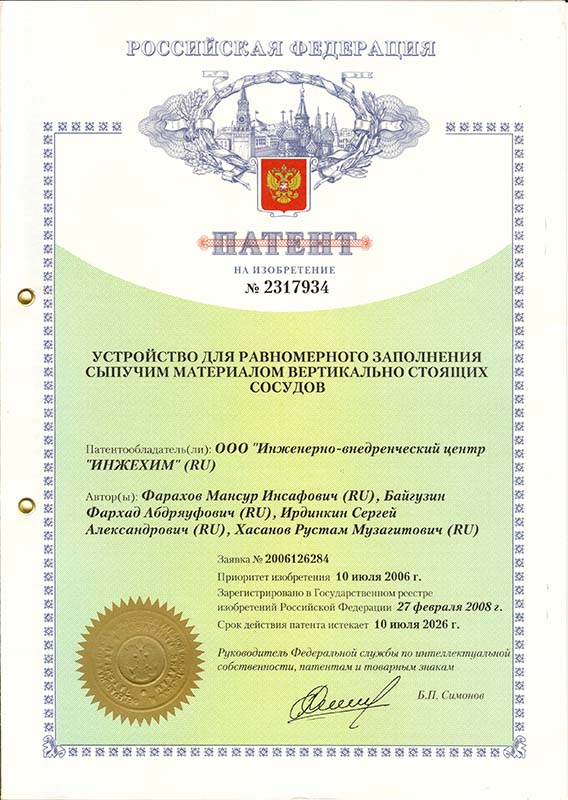
Ingehim provides a service for filling vertical vessels used in chemical and petrochemical plants with bulk solids such as catalysts and adsorbents. To deliver this service, we utilize a patented in-house loader device (Russian Patent: No. 2317934).
Unlike the traditional method of loading granular material—i.e., loading into the vessel under gravity using a hose, which does not ensure uniform particle distribution across the cross-sectional area—we use the dense loading method and our patented loader device.
Our loader device features a function that adjusts the discharge of granular materials to minimize scuffing and reduce the deterioration of bulk solid particles by allowing free movement of particles within the dense bed. Additionally, the device can alter the spread area of particles by varying the basket’s rotational speed. The loader is simple, reliable, easy to operate, compatible with various types of bulk solids, and highly efficient in achieving uniform distribution of bulk solids across the vessel’s cross-sectional area.
The loader device was used to load a catalyst into the apparatuses of the ethylene plant’s hydrogenation process line and to load an adsorbent into the ethylene treatment unit of the low-pressure polyethylene production line at the Kazanorgsintez chemical plant (Kazan, Russia).
We will calculate our service fees for bulk solids loading after receiving all required specifications via email. Additionally, we can sell the loader devices to other organizations.
Description of the loader device
Bulk solids loading is accomplished using a patented in-house loader device designed to ensure uniform loading (Fig. 1).
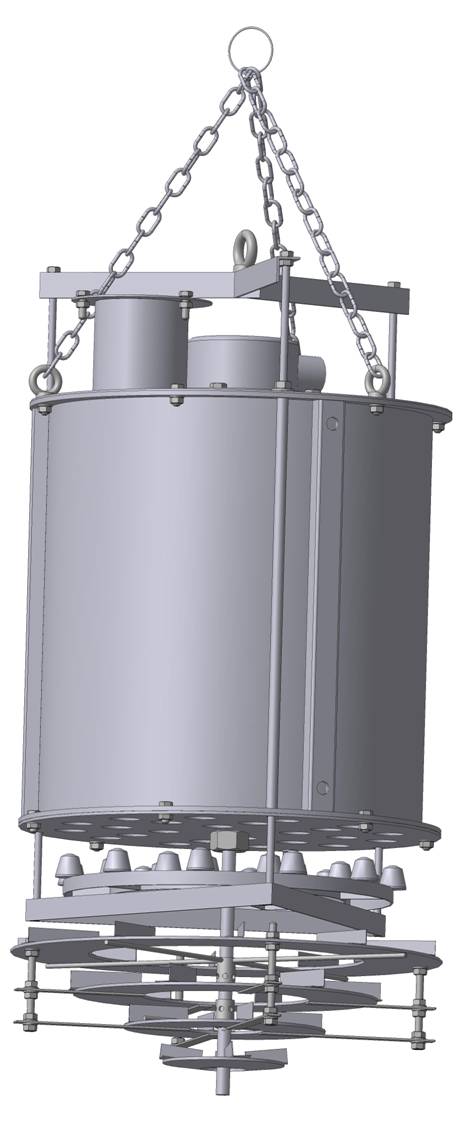 Fig. 1. Loader device for uniform loading with bulk solids
The loader device consists of a storage capacitor equipped with a branch pipe for feeding granular materials, a pneumatic drive mounted on the storage capacitor’s cover, and a control system for regulating (stopping) the granular material flow. This control system includes a perforated bottom on the storage capacitor and a movable gate valve featuring a grid with conical elements installed on it. Finally, the device includes a distribution mechanism (a basket consisting of four annular disks fitted with blades). The overall dimensions of the loader device are 450 mm in diameter and 600 mm in height.
Granular material (adsorbent or catalyst) enters a storage capacitor, filling its volume. After the gate valve is opened, the granular material begins to scatter over the surface of the pneumatic drive, which is used to rotate annular disks around a shaft. The centrifugal force varies from one annular disk to another; this variation creates a distribution of granular particles across the cross-sectional area that resembles a rain shower.
The loader device is installed into the vessel using a rope attached to the ends of chain hoists (Fig. 3). The other end of the rope is secured outside the vessel to a hoist, allowing for lowering, lifting, and adjusting the installation height of the loader device above a layer of granular materials (or above the vessel’s bottom). The installation height of the loader device above the granular material layer depends on the vessel’s diameter and typically ranges from 0.6 to 1.5 meters. The loader device is positioned inside the vessel using distance rods with rollers. Granular materials are loaded into the loader device through a feeder (Fig. 2), which contains a set of conical tubes connected to each other by chains.
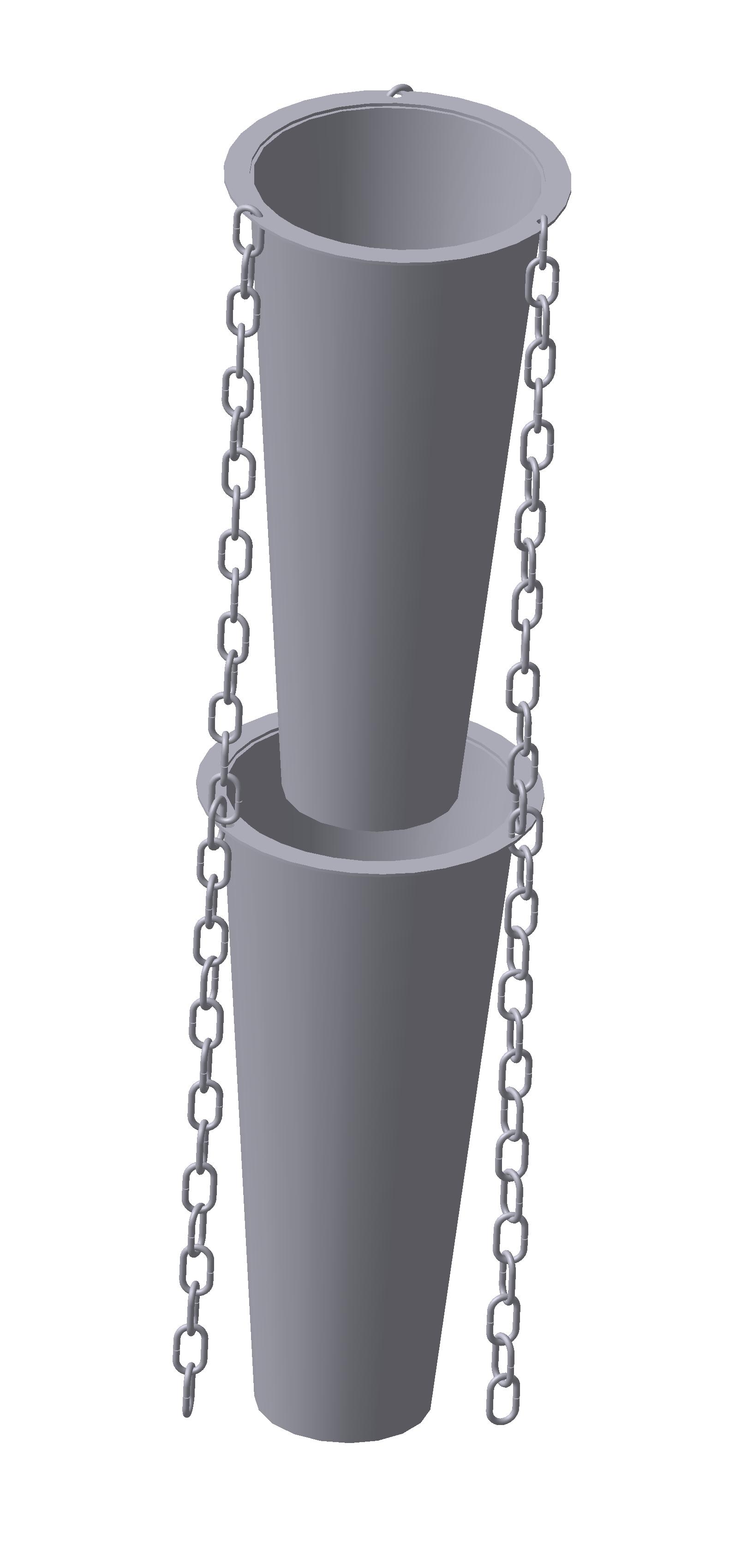
Fig. 2. Part of the feeder
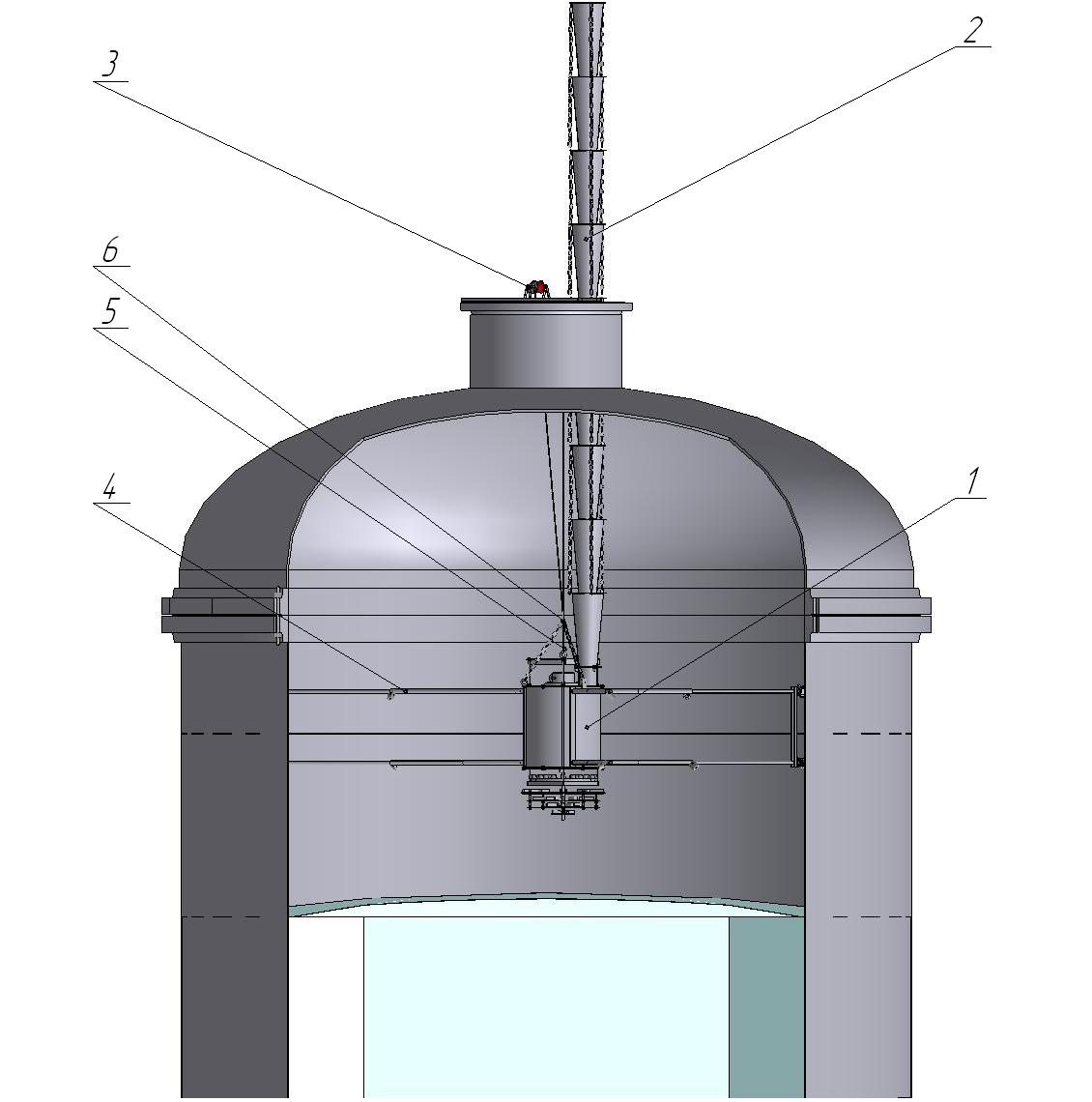
Fig. 3. Loader device inside an apparatus. 1– loader; 2 – feeder; 3 – hoist; 4 – distance rods; 5 – rope; 6 – chain suspender
The upper operating platform contains an intermediate hopper with a capacity of 1 to 1.5 m³ for receiving granular materials. The intermediate hopper is equipped with a gate valve and a fastening system to secure a feeder. If necessary, a roller block can be installed on the intermediate hopper to center the loader device. The intermediate hopper is filled with materials poured from transport hoppers, which are lifted to the required height by hoisting machines. To prevent overturning, strainers are used to secure the intermediate hopper to the operating platform. During loading operations, the presence of personnel inside the vessel is prohibited. All routine maintenance of the loader device is performed from the platform supporting the intermediate hopper. When conducting inspections or other operations during loading, the gate valve of the intermediate hopper must be closed, while the loader device drive must remain operational.
Dust generated during the movement of bulk solids is removed from the vessel using a fan.
 COMPANY PRESENTATIONS
 PRODUCT CATALOGUES
 VIDEO
VIDEO