Systems for SCF extraction
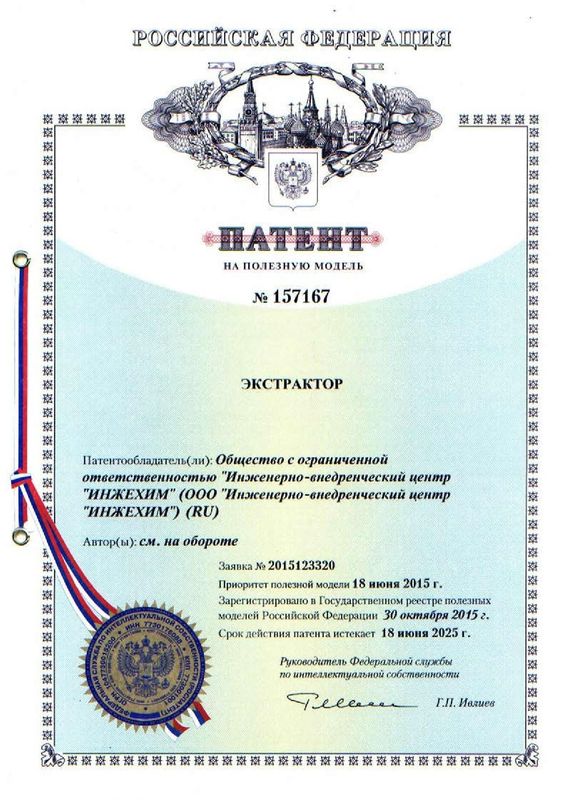
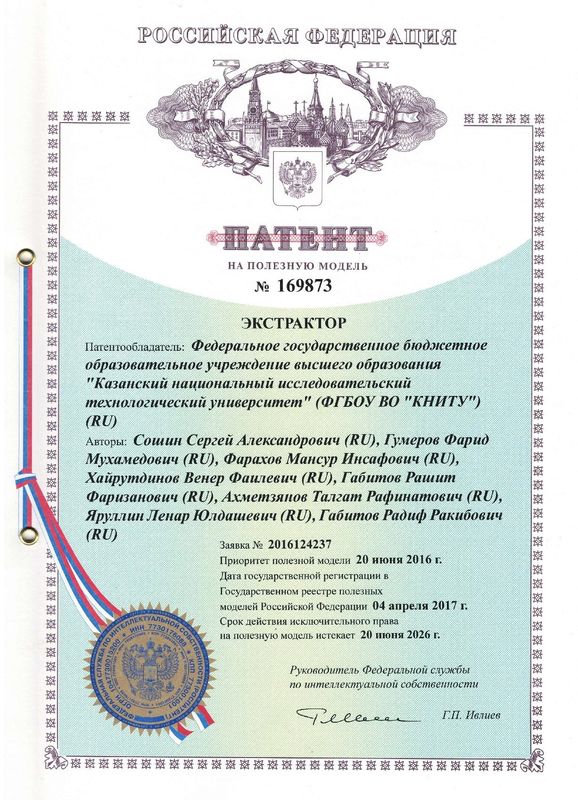
Ingehim offers proprietary in-house systems for conducting supercritical fluid (SCF) extraction at laboratory, pilot, and industrial scales (Russian patents No. 157167 and No. 169873).
Supercritical fluid (SCF) extraction technology utilizes the high solvating power of various compressed gases and the fact that a fluid’s solubility in the near-critical region is highly dependent on temperature and pressure. This property enables detailed fractionation of raw materials and regeneration of the extractant (solvent) by reducing the fluid pressure to a level where solubility becomes negligible. Common extractants include pure carbon dioxide, carbon dioxide modified with polar additives, propane-butane mixtures, and other substances. The resulting extract can be obtained in either liquid or powdered form. Advantages of SCF extraction compared to conventional methods include easy separation of the solvent and extract, high purity of the final product, preservation of volatile and thermolabile components, enhanced efficiency and selectivity, and the absence of harmful or toxic emissions.
The system for SCF extraction is a high-pressure batch apparatus.
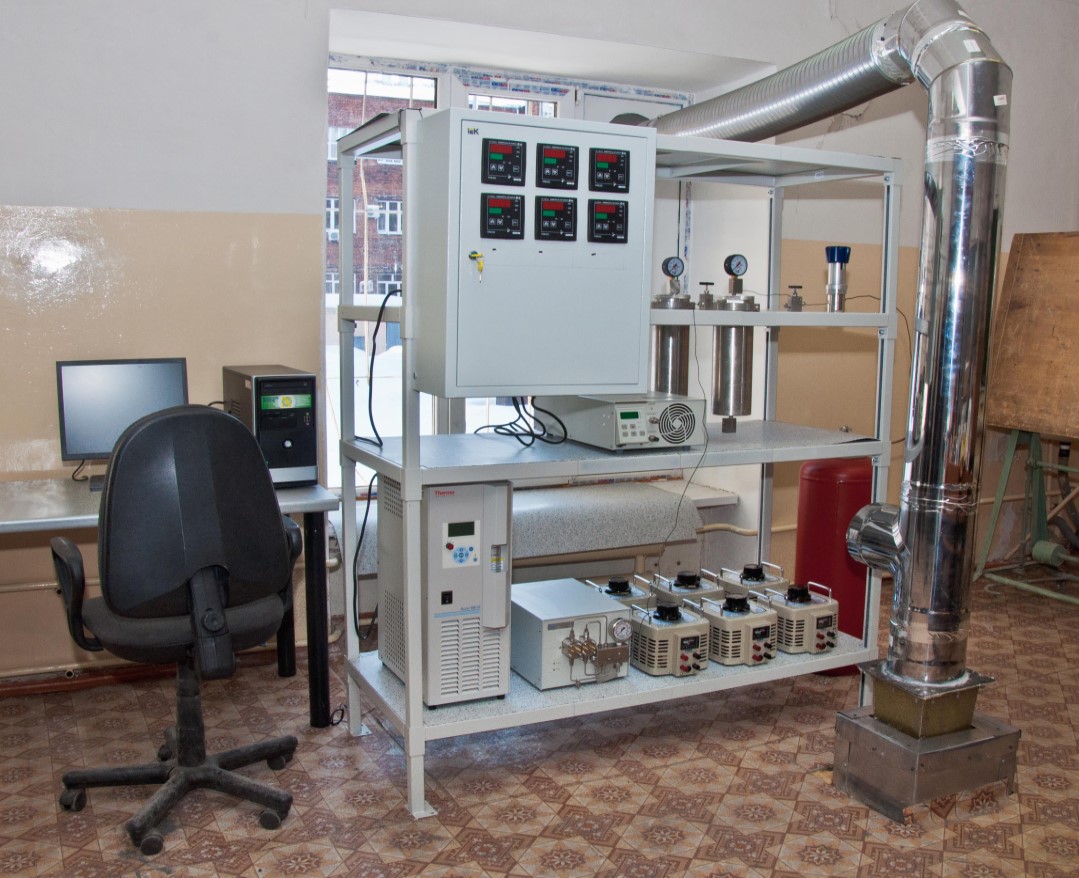 System for SCF extraction at laboratory scale
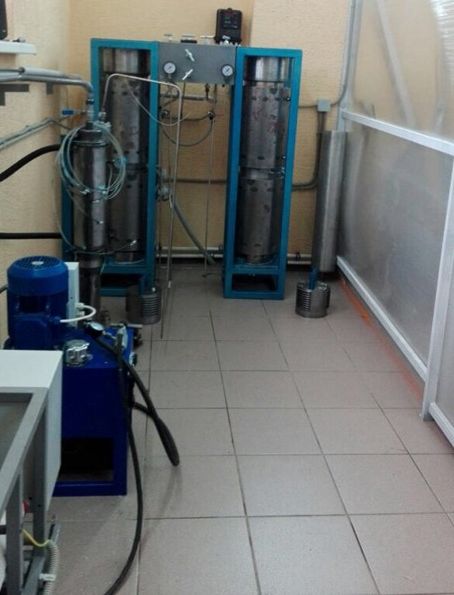 Extractors block for the SCF extraction unit at pilot scale
Applications of systems for SCF extraction:
1. Extraction of raw materials of plant origin. Using SCF CO2 extraction, a wide range of extracts can be obtained for the development of functional foods, effective pharmaceutical and cosmetic products, and biologically active food supplements. Unlike conventional extraction methods that rely on organic solvents, SCF CO2 extraction enables the recovery of the full spectrum of biologically active compounds from plant materials. In this process, the extract remains intact, and solvent separation from the extract is straightforward. SCF CO2 extraction is performed at low temperatures, typically around 40 °C. The resulting extracts require no further processing, which also reduces the cost of herbal products.
2. Regeneration of catalysts. Unlike the conventional oxidative regeneration method, which is conducted at temperatures of 400–600 °C, regeneration by supercritical fluid (SCF) extraction occurs under milder, energy- and resource-efficient conditions (80–130 °C). This approach better preserves the functional properties of the regenerated catalyst, allowing it to withstand more regeneration cycles. This technology is especially cost-effective for regenerating expensive catalysts containing rare and precious metals such as Pd, Pt, Ag, Ni, and Mo. SCF extraction regeneration has been successfully tested on catalysts including palladium catalysts G-58E and LD-265, nickel-on-kieselguhr DN-3531-Criterion 514, the ion-exchange catalyst KU-2FPP, and others. Additional studies are required to determine the optimal thermodynamic conditions for regenerating each specific catalyst.
3. Extraction of hydrocarbons from oil sludge and oil sands. Supercritical fluid (SCF) extraction using a propane-butane mixture enables the recovery of up to 96.34 wt% of commercial hydrocarbons from oil sludge and sandstone. Consequently, the cost associated with sludge disposal is eliminated.
4. Extraction of hydrocarbons from water-oil emulsions. Supercritical fluid extraction of oil-water emulsions using a propane-butane extractant enables the recovery of up to 86 wt% of dehydrated petroleum products free of mechanical impurities. Additionally, the mass content of sulfur, chloride salts, and asphaltenes is reduced by approximately half, while the kinematic viscosity decreases nearly tenfold. The separated water is suitable for technological reuse.
5. Disposal of spent railway sleepers. Existing methods for disposing of wood treated with toxic substances, such as coal oil, include grinding, impregnation with alkali or organic solvents, treatment with saturated steam or ultrasound, and explosive decompression. These methods are labor-intensive, costly, and generate harmful emissions. The proposed supercritical fluid (SCF) extraction technology is innovative, economically viable, and environmentally friendly. This technology can extract up to 97 wt% of the impregnation material from the sleepers. The extracted material is reusable, while the wood can be repurposed as fuel.
Ingehim can develop SCF technologies and produce SCF extraction systems tailored to customer requirements..
 COMPANY PRESENTATIONS
 PRODUCT CATALOGUES
 VIDEO
VIDEO